Business Readiness Guide
Before You Empty the LEGO Box
Are you really ready for your next system implementation?
When I was a kid, there was something great about opening a new LEGO set: empty the entire box, spread hundreds of pieces everywhere and start building. Of course, I'd spend half the time digging through the pile for one particular piece. Would it have been quicker to sort the pieces first and read the instructions? Absolutely. But where's the fun in that?
The problem is, organisations often approach major system implementations in much the same way — they hope the data, processes and system landscape is ready.
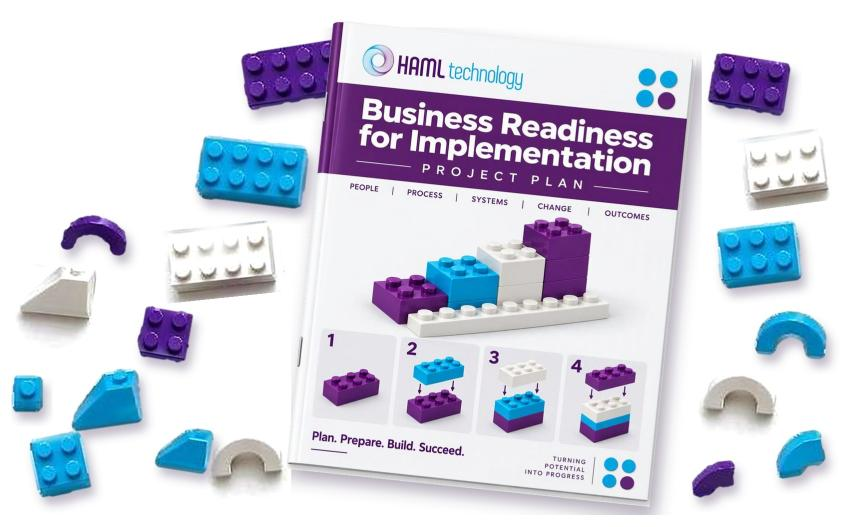
The HRIS version of emptying the LEGO box
You select an HRIS or payroll platform, appoint a partner, build a plan and get started. But have you actually organised the pieces? Ask yourself:
- Where your data lives, who owns it and whether it's usable
- Which systems need to integrate
- How identity, access and security will work
- Which pay rules and processes must translate to the new system
- Whether your people have the capability & capacity to take part
Outsourcing the implementation doesn't outsource your organisational knowledge.
Your partner will still need HR, payroll, finance, IT and security experts to explain processes, make decisions, validate designs, clean data and test — all while doing their day jobs.
That's what we mean by business readiness
Organising the LEGO pieces before you start the build. Your project plan is the instruction book; your data, integrations, architecture, security, processes and people are the pieces.
Getting ready before the build
Before you start building, do you know where all the pieces are?
Selecting a new HRIS, payroll or learning platform is only part of getting ready. If these questions are difficult to answer, that's a good sign there is some readiness work to do before implementation starts.
Architecture
- Which systems will the new platform replace, and which will remain?
- What systems will need to exchange information with it?
- Where does employee data originate, move and reside?
- Have we considered identity, authentication and access?
The question to answer
Could we clearly explain our current and future environment to an implementation partner?
Data
- What employee, payroll, learning and historical data do we hold?
- Where does it live, and who owns it?
- Are there duplicate, obsolete or conflicting records?
- What history genuinely needs to migrate?
- Who decides when data doesn't map accurately?
The question to answer
If we had to provide our migration data tomorrow, would we know where to start?
Integrations
- Which integrations exist, and which are still required?
- What needs to move, in which direction and how often?
- Which system is the source of truth for key information?
- Are any integrations manual or dependent on one person?
The question to answer
Do we understand our integrations well enough to accurately scope what needs to be built?
Security & Access
- How will users authenticate — can we use our existing identity platform and SSO?
- Who should see sensitive HR and payroll information?
- How will privileged and admin access be managed?
- How will joiners, movers and leavers be handled?
The question to answer
Could our security team clearly describe the controls they expect the new platform to meet?
Process & Pay Rules
- Are processes documented, and do they reflect reality?
- Which processes are genuine needs, and which are system workarounds?
- Do your processes have delegations and auto-approvals?
- Are your pay rules, awards and agreements documented?
- Where do spreadsheets or workarounds fill gaps?
The question to answer
Could we explain how the process should work in the future — not just how it works today?
People & Capacity
HR, payroll, finance, IT and other SMEs may need to:
- Attend workshops and make design decisions
- Explain existing processes and business rules
- Clean and validate data
- Test integrations and join UAT
The question to answer
Have we allowed enough capacity for our people to participate — or are we assuming they'll find the time?
Ready to build?
Talk to HAML Technology before you empty the LEGO box.